
Nakuru zoo (student case) (Swedish Case)
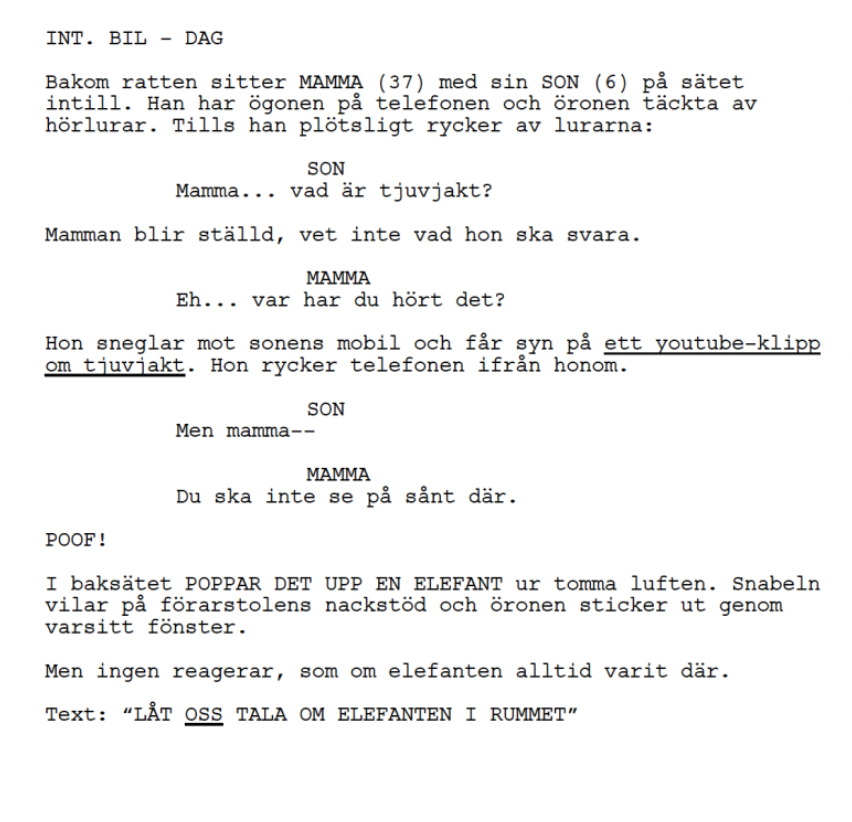
Let us talk about the elephant in the room.
Background
Recently, negative discussions have hurt sales for Nakuru Zoo. We were tasked with helping them broaden their target audience to socially conscious young families with children.
Insight
Let’s talk about the elephant in the room was born out of the realization that Nakuru Zoo doesn’t want to hide from its problems, while also making its audience feel safe. The goal is to remove the shame associated with visiting zoos.
Solution
With the campaign Let us Talk About the Elephant in the Room, Nakuru Zoo does not shy away from criticism. Instead, they address the very arguments raised against them—highlighting the importance of good animal welfare and the need for these issues to be brought into the spotlight.
The campaign aims to help the audience understand that Nakuru Zoo is aware of the “shame” associated with visiting a zoo, while also explaining why zoos are still necessary.
Team: Donna Lee (AD), Josefine Jerkin (AD), Isolda Delgado (CW), Isabelle Rydén (CW)
Nakuru Zoo
Animals in captivity is controversial. We agree that this must be questioned and discussed in order for change to happen. Our aim is to find a balance in the work of preserving animal species. We want to be part of the conversation, welcome criticism, and take responsibility for contributing to sustainable practices for animals in captivity.
Our long-term goal is that zoos should no longer need to exist. However, today’s reality looks different. One important part of preserving animal species is raising awareness about animals and the ways in which they are threatened.
Our focus is to rescue animals and preserve endangered species. Our animals are extraordinary, and we want to share that with the public. At the same time, their well-being always comes first. That is why we set high standards for ourselves and for how we care for animals in captivity. You can read our list of requirements on our website. We use our zoo primarily as a platform for education rather than entertainment.
We want to share the joy that our incredible animals bring us. This is an important part of our work. We want to inspire people to take part in preserving animal species.
The purpose of Nakuru Zoo is to rescue vulnerable animals and work to preserve endangered species. Our work is funded by welcoming visitors to the park. We aim to educate and spark enthusiasm for conservation. This must never come at the expense of the animals’ well-being. We believe in sustainable and responsible captivity.
Tone of voice in communication
1.How much space does an elephant need to thrive?
Let us talk about the elephant in the room. An elephant risks becoming depressed if it has too little space. In the wild, elephants walk several miles every day — a need that no zoo in the world can fully meet. Poaching and climate change have led to a 96% decline in the African elephant population over the past 100 years.
Nakuru Zoo works hard to help preserve the species. Keeping elephants in a limited space is not ideal, but we compensate by stimulating them in other ways — through enrichment, activity, and care that prioritizes their well-being.
2.How many lowland gorillas are left?
Let us talk about the elephant in the room. In 2018, there were approximately 360,000 lowland gorillas left in the world, making the species endangered. Poaching, illegal trade, and human-transmitted diseases have caused a drastic population decline in recent years.
At Nakuru Zoo, we work to help preserve the species, and our gorillas are part of an international conservation program. If gorillas in the wild were to disappear, this program would serve as a genetic safeguard — a gene bank for the future… and more.
TV commercial script (SWE)

Digital guided tour with Greta.

At Nakuru Zoo, you can take a digital guided tour with environmental activist Greta Thunberg.
Through our app, Greta guides you around the park and talks about the dangers that different animals face in their natural habitats, as well as what we can do to help prevent these threats. She covers everything from poaching to deforestation and drought.
Greta Thunberg has visited Nakuru Zoo, highlighted the challenges of keeping animals in captivity, and helped us develop a more sustainable way to run our zoo while continuing our work to preserve endangered species.
Print (SWE)


Summary
Zoos cannot be sugarcoated — they are a necessary evil in today’s world. Our audience is well aware of the controversy surrounding visiting zoos, but they need to understand the important work that these visits help fund. By openly addressing the dilemmas of keeping animals in captivity, we can provide a more nuanced perspective and shift the audience’s attitude.