Kvinna till kvinna (Swedish case)
The crisis is here, the water has broken
Background
In October 2021, healthcare workers and managers began resigning from maternity care units across the country. Alarms were raised about unsustainable working conditions, a shortage of care beds, and threatened patient safety. Media reports included testimony from both staff and patients about how they were affected. For a while, it seemed like the debate was gaining momentum. Mass resignations, petitions, and eye-opening accounts forced politicians to take action.
Kvinna till Kvinna wants to launch a campaign to bring renewed attention to the maternity care crisis.
Insight
It’s time for maternity care to be scrutinized, and for long-term improvements to be implemented. The campaign aims to capture public attention and make people realize the seriousness of the situation. How do you do that most effectively? By presenting a dystopian scenario.
Team: Isabelle Rydén (CW), Linnéa Woll (AD), Nina Hansson (AD), Isolda Delgado (CW)
In October 2021, healthcare workers and managers began resigning from maternity care units across the country. Alarms were raised about unsustainable working conditions, a shortage of care beds, and threatened patient safety. Media reports included testimonies from both staff and patients about how they were affected. For a while, it seemed like the debate was gaining momentum. Mass resignations, petitions, and eye-opening accounts forced politicians to take action.
A similar situation occurred in 2013 — mass resignations and alarms — and now here we are again, with short-term solutions promised once more.
With this campaign, we aim to once again draw attention to a crisis that affects and touches many people but is rarely heard. In closed Facebook groups and online forums, people continue to report shortcomings in maternity care. They share stories of being forced to give birth at home on bathroom floors after being sent home from hospitals due to lack of beds, or mistakes made by stressed healthcare staff that have resulted in lifelong injuries for women and newborns. Midwives describe being responsible for multiple active births at the same time, having to run between rooms, often without the chance to eat or use the bathroom themselves.
Brochure
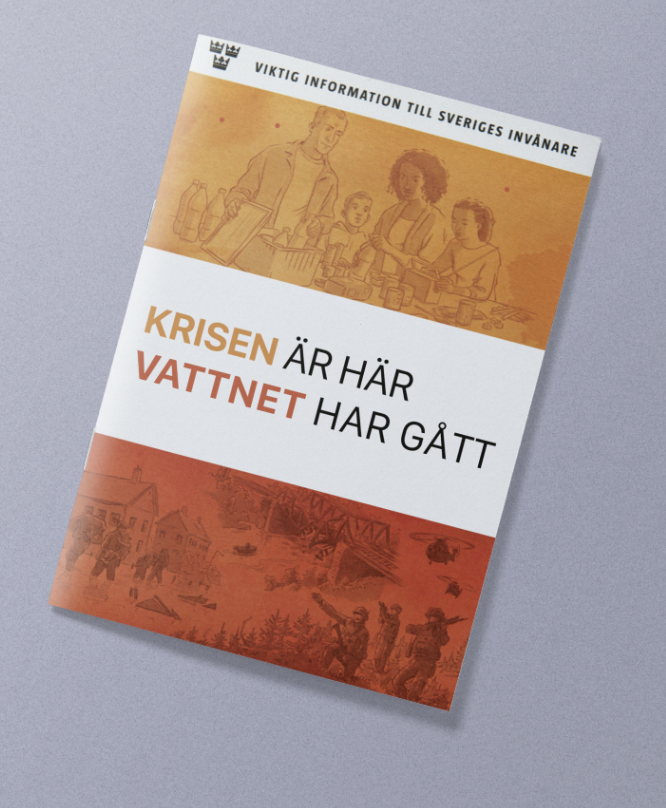
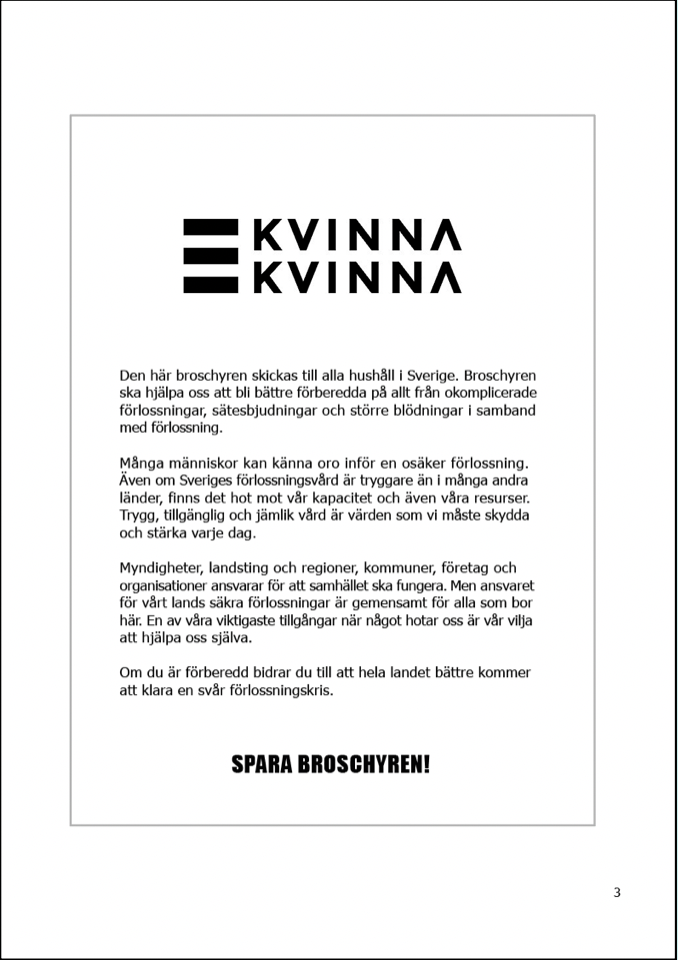
This brochure will be sent to Swedish politicians and influencers to raise awareness and generate buzz around the maternity care crisis. It is an exact copy of the official “crisis brochure.”
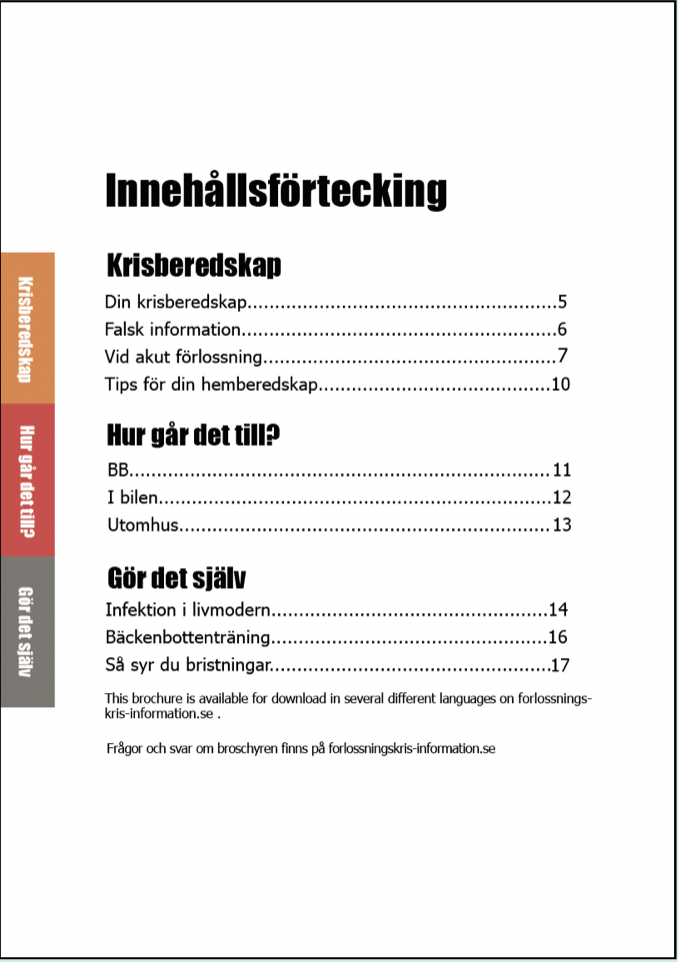
Prints
During the pandemic, Sweden’s government agencies — such as MSB (the Swedish Civil Contingencies Agency), the Public Health Agency, and the National Board of Health and Welfare — distributed information and guidance to the public through posters that we all now recognize.
What would these posters and brochures have looked like if maternity care had completely collapsed, and people were being told to deliver their babies on their own?
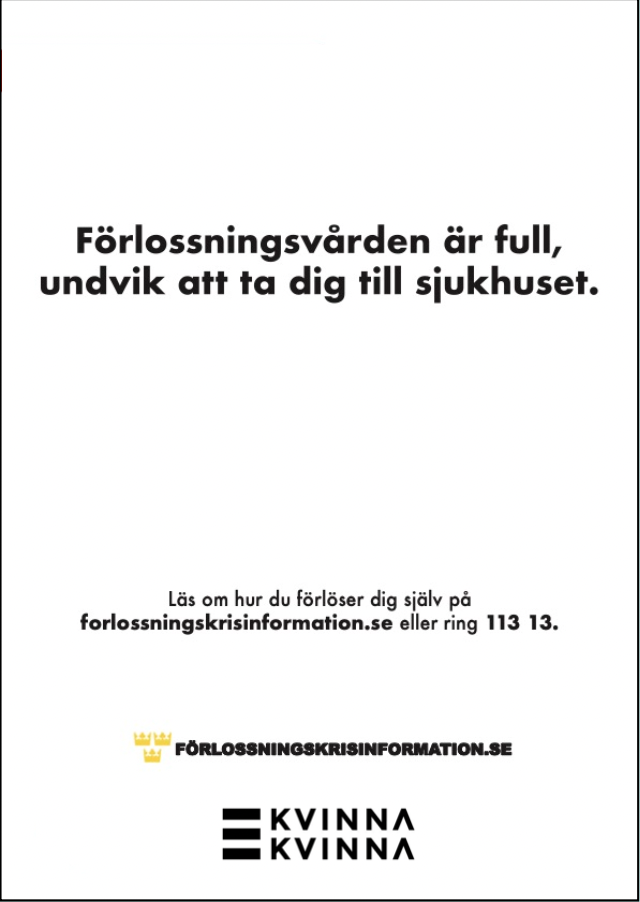

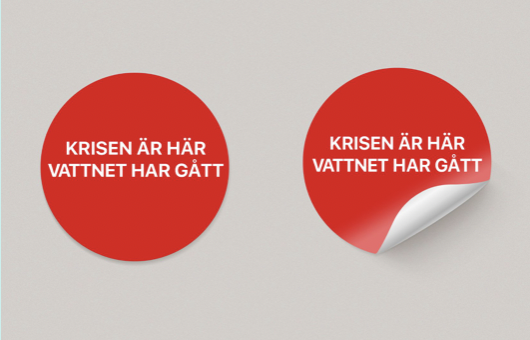
Small and shareable:

Manifesto
In the fall of 2021, healthcare workers and managers resigned from various maternity wards across Sweden, having had enough of the shortcomings and the threatened patient safety.
Alarms were raised about overcrowded maternity wards and catastrophic workloads for staff due to severe understaffing.
The maternity care crisis received media attention, and the midwives’ revolt was temporarily addressed by politicians promising improvements.
Then, it went quiet.
In various forums, people continue to share their experiences of relying on maternity care that, because of its shortcomings, could not meet their needs.
Sweden’s maternity care crisis is far from over. It has been ongoing for years, and the small changes currently promised are unlikely to lead to long-term improvement.
Our campaign illustrates the worst-case scenario — a reality that some people have unfortunately already experienced. A scenario caused by overcrowded maternity wards and staff shortages.
In Sweden, there are people carrying stories that are rarely heard. Stories of being denied hospital admission in time, forced to give birth at home on bathroom floors, or in a car on the way to the nearest emergency department.
There are people who carry trauma and injuries caused by the maternity care crisis. There are also people who have lost their child during childbirth. These testimonies must be heard, and we must ensure they are not repeated.
This debate cannot end.